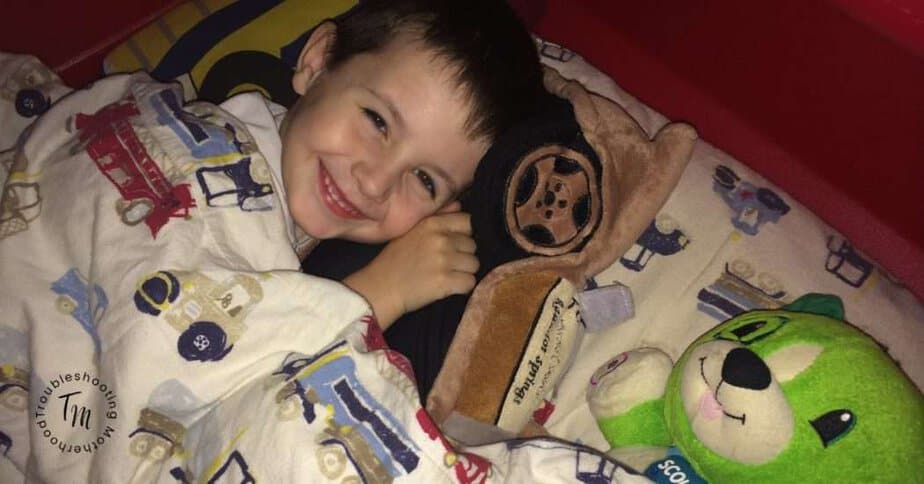
I’ll never forget the first night I discovered this trick. My toddler was overtired, cranky, and nowhere near sleep. He was flailing around in bed, whining about something, and I could feel my own frustration bubbling.
I felt like I was going to lose it, and I was willing to negotiate, offer snacks, or bribe him with a new Hot Wheels to get it to stop.
In my frustration, I sat my little guy on my lap to cuddle, and I started to breathe.
Slowly. Deeply. In through my nose, out through my mouth.
I wasn’t even doing it for him, really. I was trying to calm myself down before I joined the meltdown. But then something kind of magical happened. He noticed.
He stopped flailing. He looked at me. And after a few seconds, he took a breath too.
Not a perfect deep breath. More like a hiccup-y, tired toddler sigh. But it was a start.
I breathed again.
And he followed.
In. Out.
In. Out.
The room got quieter. His body softened. Mine did too.
And just like that, he drifted off to sleep. The bedtime battle ended, and there was no need for a negotiation or a new toy on our next trip to Walmart.
That’s when it hit me that I’d found a natural way to help kids sleep that didn’t involve a complicated routine or some expensive book telling me what to do.
It was kind of magical, and I was actually excited for the next day’s bedtime so I could see if this was a fluke or something that actually worked. To my surprise, it worked again and again and again.
Disclaimer: This post may contain affiliate links that I may earn a commission from. As an Amazon Associate, I earn from qualifying purchases. You can read my full disclosure HERE.
Why This Works: The Power of Mirroring
Here’s the thing most people don’t realize: kids are wired to tune in to us, especially during emotional or stressful moments. They don’t always listen to what we say, but they’re highly sensitive to what we do.
When you start deep breathing, your body cues theirs.
You know how when someone yawns, you can’t help but yawn too? Deep breathing works the same way; it’s surprisingly contagious.
When your toddler is all wound up, watching you stay calm helps their body feel safe enough to settle down, too. You’re not forcing it or walking them through it; it just kind of clicks.
It’s a subconscious rhythm: you breathe, they breathe.
And if you’ve been wondering how to help kids fall asleep without turning bedtime into a power struggle, this might be the simplest answer.
How to Try It Tonight
This doesn’t need to be fancy or formal. You don’t need calming music or a meditation app (though those can be great add-ons). All you really need is your breath and, of course, you.
Here’s what to do:
Sit or lie down near your toddler.
You can snuggle next to them, sit at the edge of the bed, or even lie on the floor if that’s where bedtime has taken you tonight.
Start taking slow, deep breaths.
Inhale through your nose. Exhale through your mouth. Make it a little louder than normal so they can hear it.
Don’t say anything.
No instruction, no “breathe with me,” no coaching. Just model the behavior.
Let the rhythm do the work.
Give it a minute or two. Most kids will start to mimic you without even realizing it.
Keep going until they drift off.
Stay in sync with their breath if you can. You’ll be able to feel their body relax.
If you’re looking for a trick to fall asleep fast that actually works, for both you and your child, this is a great place to start.
Optional Add-On: Try a Soothing Bedtime Buddy
If your little one responds well to sound or cuddly companions, a tool like the My Pal Scout or My Pal Violet can be a great addition. It plays calming lullabies, says your child’s name, and even includes bedtime routines you can customize.
These were favorites in our house; we got one for our oldest, my daughter got Violet, and then Scout was passed down to our youngest.
It’s not essential for the breathing method to work, but it can help set a peaceful tone, especially if your toddler needs a little extra comfort to settle down.
Bonus: It Works for You, Too
One of the best parts of this trick? It helps you calm down, too.
Bedtime battles can be emotionally draining. So, when you’re taking deep breaths, you’re regulating your own nervous system, which helps you stay patient, grounded, and way less likely to spiral when your toddler starts whining about something ridiculous.
In fact, one of my biggest takeaways from this whole experience is that learning how to get kids to sleep fast sometimes starts with us calming ourselves first.
Final Thoughts
There are a lot of bedtime strategies out there, but if you’re looking for something simple, free, and surprisingly effective, start with your breath.
No timers. No bribes. Just you, breathing with your child, teaching them (without saying a word) how to calm their body down.
It’s quiet. It’s powerful. And when you’re desperate for natural ways to help kids sleep without the drama, it’s a trick worth trying.
Want more realistic tips for raising tiny humans without losing your mind?
Make sure you’re subscribed to my newsletter, because we’re not about perfect parenting here. Just practical solutions, deep breaths, and maybe a glass of wine after bedtime.

Looking for more toddler tips?
- Easy Ways to End a Power Struggle
- Why Does My Toddler Cry at Bedtime?
- Phrases to Avoid When Teaching Toddlers to Listen
- Genius Ways to End a Toddler Tantrum
- The Most Important Life Skills to Teach Your Kids
- How to Potty Train a Stubborn Child



Leave a Reply Cancel reply