
If you’ve ever googled how to clean when you’re mentally exhausted, this post is for the days when your brain is done before the mess is.
If you’re physically capable of cleaning but mentally completely done, this post is for you.
Mental exhaustion doesn’t look like laziness. It looks like standing in your kitchen, knowing there are things you should do, and feeling stuck the moment you try to figure out where to begin.
The mess gets annoying fast. The to-do list feels like too much. And advice like “just start small” somehow makes everything feel harder.
When you’re mentally exhausted, you don’t need motivation. You don’t need discipline. You don’t need a perfect plan. You need fewer decisions and a way to reduce the pressure fast.
This post walks you through how to clean when you’re completely drained and the mess is making everything feel worse.
✨ Quick Cleaning Wins to Get You Started
- Start with the easiest visible mess first (trash, dishes, or laundry)
- Set a 5-minute timer so the task feels manageable
- Focus on one room instead of the whole house
- Do a quick trash-bag sweep to remove obvious clutter
- Remember: progress counts, even if the house isn’t perfect
Save this cleaning reset for later 👇
When the house starts feeling overwhelming again, you’ll have a simple plan ready to help you reset things quickly.

Disclaimer: This post may contain affiliate links that I may earn a commission from. As an Amazon Associate, I earn from qualifying purchases. You can read my full disclosure HERE.
What “mentally exhausted” cleaning actually looks like
Mental exhaustion isn’t the same as not knowing where to start. It’s not procrastination either. And it’s definitely not a motivation problem.
When you’re mentally exhausted:
• Your brain is already overloaded
• Decision-making feels painful
• Even simple tasks feel harder than they should
This is often decision fatigue. You’ve already used up your mental energy managing kids, work, schedules, and everything else you’re juggling.
Cleaning means making a bunch of small decisions, and when your brain is already done, even those feel like too much.
That’s why so many moms feel like they’re always behind on housework, even when they’re doing plenty. It’s not that you’re bad at cleaning. It’s that your mental load is maxed out.
If this sounds like you, you’re not failing at this. You’re just tired.
Why trying to “power through” never works
When you’re mentally exhausted, pushing harder usually backfires.
Here’s why:
• Cleaning requires choosing what matters first
• Mental fatigue makes every choice feel equally urgent
• Your brain protects itself by shutting down
So you bounce between rooms. You start five things and finish none, or you avoid cleaning altogether because starting feels overwhelming.
This is part of the messy house cycle: the mess builds, you feel worse, and the pressure to “catch up” makes everything feel harder instead of easier.
The solution isn’t doing more. It’s intentionally doing less, so things feel easier instead of harder.
What actually helps when your brain is done
When you’re mentally exhausted, cleaning needs to happen on autopilot.
That means:
• No complex routines
• No reorganizing
• No decisions that require thinking ahead
The goal isn’t progress here. It’s making things feel a bit easier. You’re clearing the messes that are stressing you out, not aiming for a full reset.
The 3 things to clean when you’re mentally exhausted
If you do nothing else, do these. They create the biggest emotional payoff with the least mental effort.
- One surface you see first
This is usually your kitchen counter, dining table, or bathroom sink.
Clear it. That’s it. Don’t reorganize. Don’t wipe cabinets. Just remove the clutter that’s driving you crazy.
Seeing even one clear surface when you walk into a room helps more than you’d expect. That’s why counters matter so much.
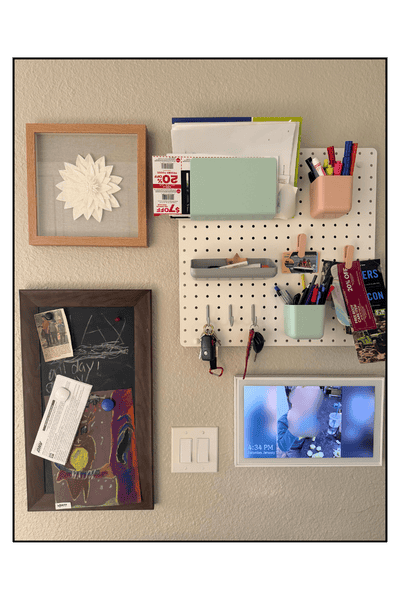
One thing that’s helped more than I expected is having a simple command center in the kitchen. It’s nothing fancy… just a place where the papers, schedules, and random daily stuff can land instead of spreading across the counters.
That little pegboard makes a huge difference between clutter and clean. It’s a really convenient place to keep odds and ends, extra car keys, random stuff I don’t know where to put and papers I will need at some point, just not right now.
I can see what matters, ignore what doesn’t, and move on. The Skylight Calendar has been especially helpful for this. Being able to glance at the next day without opening an app or digging through reminders takes a surprising amount of pressure off, especially on nights when my brain is already done.
- Trash only
Grab a bag and walk through the main living area.
Throw away trash.
Ignore everything else.
Trash is the easiest place to start since there’s nothing to think about. Getting it out of the way helps the room feel less overwhelming.
- Finish one thing already started (or skip entirely)
If there’s a load of laundry already in the washer or dryer, finish that one load. Dry it, fold it, put it away.
If nothing is already running, skip laundry altogether.
Starting new tasks just gives you more to think about. Finishing something you already started helps your brain feel a little less scattered.
The bare-minimum reset that still counts
This isn’t your full nightly reset. It’s more like the backup plan for nights when you don’t have much left.
- Set a timer for five minutes.
- Pick one of the three tasks above.
- Stop when the timer ends.
That’s it.
This kind of reset works because it takes some pressure off instead of adding to it. It’s enough to keep the mess from snowballing and enough to make tomorrow feel more manageable.
On nights when you have more energy, this flows naturally into a full nightly home reset. On nights when you don’t, this is still a win.
What to skip (and why skipping helps)
When you’re mentally exhausted, skip:
• Deep cleaning
• Organizing
• Projects that require decision-making
• Rooms no one will see tomorrow
Skipping isn’t quitting. It’s doing what helps you get through the day without making things harder than they already are.
How to know when you’re done
You’re done when:
• The space feels calmer
• You can breathe a little easier
• Tomorrow doesn’t feel impossible
Done doesn’t mean spotless. It means the house feels easier to live in and some days, that’s all you need.
A quick note on experience and trust
I’ve been through times when mental exhaustion made everything feel harder, including cleaning. I learned (sometimes the hard way) that forcing productivity during those moments only made burnout worse.
What helped wasn’t a better system.
It was learning when to simplify and when to stop.
If you’re in that place right now, you’re not alone. There are so many women dealing with the same thing.
And, if your house has completely fallen apart and you need a fresh start, this one-day house reset plan can help you reset your home without feeling overwhelmed.
Final thoughts
You don’t need to catch up.
You don’t need to fix everything.
You don’t need a perfect routine.
When you’re mentally exhausted, cleaning should make life easier, not harder. Some days, that just means five minutes, one surface, and a little less to deal with. And that’s enough for today.
If you want to keep going, these posts build on the same idea and meet you where you’re at:
- What to Clean First When Everything Is a Mess
- Cleaning When You Have Zero Motivation
- How to Clean When You Don’t Know Where to Start
- The Nightly Home Reset Checklist
- Why Your House Never Stays Clean
- Cleaning with a Clingy Toddler
- How to Clean When Baby Only Contact Naps




Leave a Reply