
First baby on the way? Here’s how to tell if you’re going into labor, what early signs to look for, and when to head to the hospital.
So, you’re waddling, nesting, and Googling every twinge. Welcome to the final stretch of pregnancy, also known as the “was that a contraction or gas?” stage.
Whether it’s your first baby or your third, figuring out if you’re actually going into labor or just dealing with another round of Braxton Hicks is…well, confusing.
Let’s break down the real signs you’re going into labor, and what to do once you know it’s go time.
Disclaimer: This post may contain affiliate links that I may earn a commission from. As an Amazon Associate, I earn from qualifying purchases. You can read my full disclosure HERE.

10 Signs You’re Going Into Labor
Labor doesn’t look the same for everyone, and not all of these signs happen in order. Some show up days before labor begins, while others mean things are moving fast.
These are the most common signs your body may be getting ready for labor, and how to recognize the real thing.
1. Real Contractions vs Braxton Hicks: How to Tell the Difference
If you’re googling “how to know if you’re in labor,” this is usually the first big question. Real labor contractions can feel kind of like period cramps…but worse.
They build in strength, get closer together, and don’t go away, no matter what you do.
What Real Labor Contractions Feel Like:
- They start out mild but become more intense over time
- They occur at regular intervals (every 10 minutes, then 8, then 5…)
- Each one lasts about 30–70 seconds
- They continue whether you’re resting, walking, or lying down
- The pain typically starts in your back and wraps around your belly
If your contractions are getting longer, stronger, and closer together, and you’re having to pause what you’re doing to breathe through them, you’re likely in early labor.
During my first pregnancy, I kept waiting for the “movie-style” labor to hit me; big, dramatic, undeniable.
What I got instead? Light cramping that slowly built over hours until I realized, oh…this is it. Timing those contractions was the only thing that helped me figure it out.
Braxton Hicks Contractions (aka “False Labor”):
- Irregular and doesn’t follow a pattern
- Usually go away with rest or hydration
- Not painful, just uncomfortable or “tightening” of the belly
- Often triggered by dehydration, stress, or a full bladder
- Don’t lead to cervical dilation
Think of Braxton Hicks as your uterus warming up. Annoying? Yes. Dangerous? Nope.
But real labor contractions are consistent, progressively more intense, and they don’t back off just because you changed positions.
2. Losing Your Mucus Plug or Seeing the “Bloody Show”
One of the most common early labor signs is losing your mucus plug, a thick, jelly-like clump of discharge that’s been sealing your cervix throughout pregnancy.
You might notice it all at once or in bits over a few days. If it’s tinged with pink or brown blood, that’s what people lovingly call the “bloody show.”
While this is definitely one of the clearer signs labor is near, it doesn’t mean you’re heading to the hospital within the hour.
For some moms, labor kicks off soon after. For others, it could still be a few days. Either way, it’s a good indication your body is getting ready for the main event.
3. Your Water Breaks (Or Just a Trickle?)
One of the classic signs labor is starting is your water breaking, but spoiler alert: it’s not always the dramatic gush you see in movies.
Sometimes it’s more like a slow trickle that makes you wonder if you just peed a little (thanks, pregnancy bladder). Both are totally normal.
What happens when your water breaks is that your amniotic sac ruptures, signaling that labor is likely on its way, if it hasn’t started already.
For some people, contractions follow right after. For others, it might take hours.
When to call your provider:
- If there’s a clear gush or persistent trickle
- If the fluid smells bad or has a yellow, green, or brown tint (this could mean meconium is present)
- If you’re GBS positive or near/past full term
Always give your provider a call if you think your water has broken. They’ll help you decide what to do next and when to head in.
4. Subtle Signs Labor Is Near (Your Body Might Just Know)
Sometimes the signs are less obvious, but your body still gives you little hints that labor might be around the corner.
If you’re wondering how to tell labor is close, pay attention to the smaller shifts that tend to show up in the final days (or even hours) before things get real.
These signs that labor is approaching may include:
- A sudden burst of energy or an intense urge to clean and organize (hello, nesting)
- Loose stools or a general “clearing out” feeling
- Nausea or a loss of appetite
- Feeling more emotional or on edge than usual
While these symptoms don’t guarantee labor is starting right away, they often show up within 24 to 48 hours before active labor begins.
So if your mood swings suddenly collide with a need to scrub the fridge at midnight? Yeah…it might be time to double-check your hospital bag.
The day before I went into labor, I deep-cleaned my kitchen cabinets like my life depended on it. I didn’t even like my kitchen cabinets.
Looking back, that sudden nesting frenzy was definitely my body’s way of saying, “Something’s coming…”
5. Persistent Back Pain Could Be Back Labor
Not all contractions start in your belly, sometimes, the biggest clue is in your back. One of the lesser-known signs of back labor is a deep, aching pain in your lower back that comes and goes in a pattern.
If that pain doesn’t ease up with rest, position changes, or a warm bath, and it starts syncing with contractions? It could be the real deal.
Back pain in labor often happens when baby is in a posterior position (facing your front), causing their head to press directly on your spine.
It can make labor feel more intense, but it’s still totally manageable with the right support.
What can help:
- Counter pressure (ask your partner to press into your lower back during contractions)
- A heating pad or warm shower
- Rocking or leaning forward on a birth ball
If your back pain becomes rhythmic and consistent, and you’re having other labor signs, it’s time to pay attention, this could be your body saying, we’re doing this.
6. Pressure in the Pelvis or Baby “Dropping”
If you suddenly feel like you’re carrying baby lower, that’s probably what’s known as lightening, when baby moves down into your pelvis in preparation for birth.
It’s one of the more common signs baby is engaged, meaning they’re getting into position for delivery.
You might notice:
- Pelvic pressure before labor, like a heavy, bowling ball feeling down low
- More waddling
- The ability to breathe a bit easier since baby isn’t pressing up on your lungs as much
- Increased bathroom trips, thanks to more pressure on your bladder
It’s a classic pre-labor sign, but not a green light that labor is starting right away. Some babies “drop” weeks before labor begins, especially for first-time moms.
For others, it might happen just hours before contractions kick in.
Either way, if you’re feeling that heavy, low-down pressure and suddenly grabbing the belly band again for support, baby’s definitely moving in the right direction.
What to Do When You Think Labor Is Starting
You’ve got the cramps, the back pain, the pressure, and now you’re wondering, is this it? If you’re noticing several signs labor might be starting, don’t panic.
Here’s what to do when labor starts, so you can feel prepared (even if your brain is in full nesting mode).
1. Time Your Contractions
Start tracking how long your contractions last and how far apart they are. You can use a contraction timer app or just jot down the times.
What you’re looking for is a consistent pattern where contractions are:
- Coming closer together
- Lasting longer (30–70 seconds is common)
- Getting stronger, not fading away
For many providers, the “5-1-1” rule is a good benchmark: contractions every 5 minutes, lasting 1 minute each, for 1 hour, but check with your doctor or midwife for their exact recommendation.
2. Call Your Doctor or Midwife With Any Concerns
If you’re unsure whether it’s time to go in or if something just feels off, don’t wait. Reach out to your provider.
They’ll walk through your symptoms and help you decide whether to stay home, head in soon, or get checked right away.
Also, call right away if:
- Your water breaks (especially if it’s green, yellow, or has a strong odor)
- You experience heavy bleeding
- Baby’s movement feels different or reduced
- You’re feeling dizzy, faint, or unwell
I remember lying on the couch, trying to decide if I should call my doctor’s office or wait it out, and I ended up texting my sister just to say, “I think something’s happening, but I don’t want to be dramatic.”
(Spoiler: I was in labor. Call your provider. You’re not being dramatic.)
3. Rest, Hydrate, and Eat Something Light
In early labor, you don’t need to rush out the door. Labor can take time to progress, especially with your first baby.
So try to rest between contractions, drink water or electrolyte drinks, and eat light, energy-boosting snacks (toast, fruit, broth, etc.) while you can. You’ll want the fuel later.
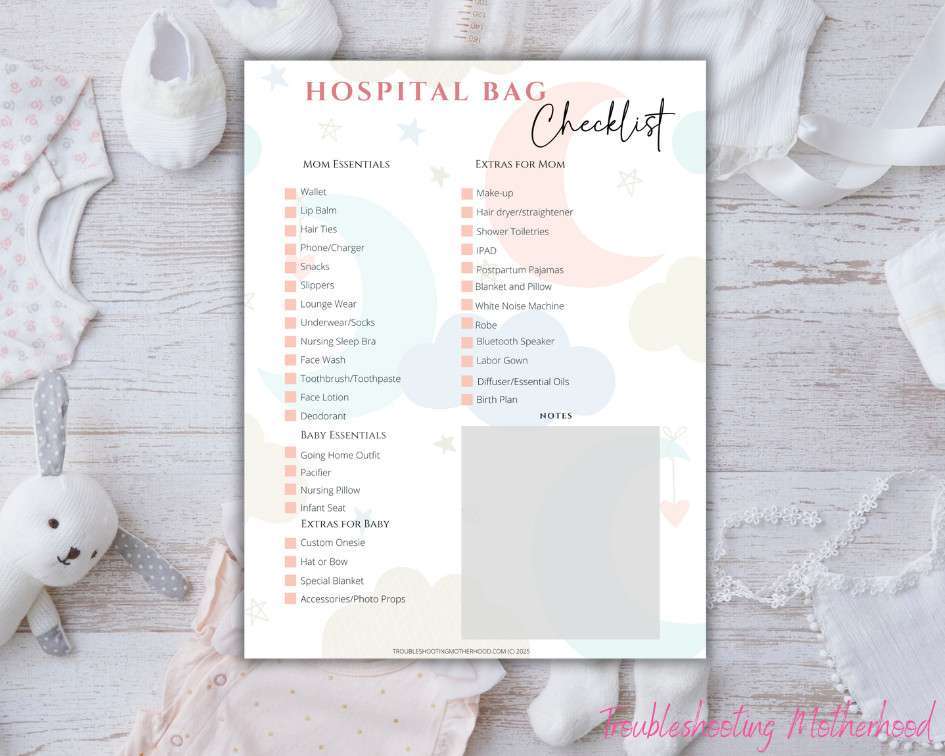
4. Double Check Your Hospital Bag
If it’s been sitting half-zipped by the front door for weeks (no judgment), now’s the time to toss in those last-minute items:
- Phone charger
- Insurance card and ID
- Hair tie or headband
- Lip balm
- Snacks for your partner
- Anything comforting (like your own pillow or fuzzy socks)
Even if you’re not heading in just yet, being ready will help you feel a little calmer and in control.
You can check out my full list of what to pack for labor and delivery here.
Knowing when to go to the hospital for labor can feel like a guessing game, especially the first time around.
But remember, your care team is there to help you figure it out, and there’s no shame in calling or heading in early if you’re unsure.
Trust your instincts, ask questions, and take it one moment at a time.
If you want to feel more prepared before labor starts, this post covers what actually helps ahead of time.
Final Thoughts: Trust Your Body and Your Instincts
In the final stretch of pregnancy, it’s totally normal to second-guess every cramp, ache, or weird feeling.
If you’re not sure whether what you’re feeling is true signs you’re going into labor, you’re not alone; most of us have Googled “how to know you’re in labor” more times than we’d like to admit.
Here’s the truth: even if it ends up being a false alarm, it’s always okay to call your provider or get checked. That’s what they’re there for.
You don’t need to “tough it out” or wait until things feel urgent to ask questions.
Your body knows what it’s doing, and you can trust it. Pay attention to the signs, listen to your instincts, and don’t be afraid to speak up if something doesn’t feel right.
You’re already doing an amazing job navigating this huge moment.
And when labor really begins? You’ll know. Maybe not right away, but when things pick up, you’ll feel it. And you’ll be ready.

Looking for more pregnancy and postpartum content? Check out these other posts:
- Birth Plan Checklist
- 5 Ways to Avoid Tearing During Childbirth
- The Best Labor Advice I Ever Got
- What to Pack for Labor and Delivery
- Preparing for Life with a Baby


Leave a Reply